The entertainment industry is perhaps the one industry where talent is celebrated over and above substance. A silly joke can catapult one to celebrity status overnight with no consideration whatsoever for the cost of the joke. And whilst the audience is reeling with laughter, elsewhere the butt of the joke is seething with resentment. So it is with Akpos and Warri.
With the ascendancy of stand-up comedy in these parts of the world, a rash of comics have debuted in this nouveau profession in the garb of “Warri”. From an objective point of view, we must thumbs-up to these debutants for bracing up to the challenge of eking out an honest living for themselves in the face of a dire lack of employment opportunities across the country. From low lifers, some of them have become big names flaunting mansions and big cars and strutting celebrity stages across the land and overseas. Good for them. They are success stories and deserve the accolades – except for the collateral damage they caused in charting their way up. They promoted (and indeed still promote) their initial low life experiencing as Warri, in language and character, and also in representation. It is like picking up a stray boy from under the bridge or thereabouts in Ojuelegba in Lagos and projecting his manner of speaking and character as the model for Lagos! Disservice cannot be better served.
How was it ever possible that this could happen to Warri? No bona fide child, no matter how he loves the game of football, will bring out his mother’s pot to be used as football. Therein lies the answer to the riddle. These Warri comics are not bona fide children of Warri. They are at best naughty children of next-door neighbors and live-in tenants who appropriated Warri and turned it into a football, the butt of rude jokes that have robbed true children of Warri of the dignity and nobility that are traditionally theirs. Check them out – from the one that calls herself “Warri Girl” to the one that has made Akpos a brand. And of course, a few foolish direct children, fascinated by Akpos, join in kicking the pot around, mindless of the ridicule it causes their mother and where their meal comes from.
From rib-cracking one-stanza stage and social media jokes to cartoons and short videos to 30 Days in Atlanta and more recently to 10 Days in Sun City, Akpos has taken on a life of its own and is consistently, even if unwittingly, being projected as the typical Warri person and, by implication of the name, the Urhobo as the typical Warri people – all of which dovetail into the false narrative of Urhobo ownership of Warri.
Such innocuous, and in some instances deliberate, campaign on the sensitive matter of indigene-ship in a plural society as Nigeria is, to say the least, reckless, vexatious, dangerous, and utterly irresponsible, howbeit borne of ignorance. It can be seen, for example, how several Akpos have attempted to rise from oblivion here and there, arrogant, and cocky as only ignoramuses can be, fanning embers of discord on grounds of a faulty understanding of their own badly mangled and incoherent history developed in the last two decades by ethnic bigots and quislings. Peeping from their match boxes of family compounds that they call kingdoms, they are unable to see the vast potential for exemplary brotherly coexistence and unparalleled development that Warri metropolis represents for the entire human race.
At the risk of dignifying what otherwise is genuinely imbecilic, but in order to underscore the nuisance that is the concept of Akpos, below is what a group of them have put on the internet. It is presented unedited to further define the Akpos syndrome by inference.
“Following the recent argument between the Itsekiri and Urhobo people of Delta State over who owns the city of warri and the recent crown of their (Itsekiri) King HRM. Utieyinoritsetsola Emiko–Ogiame Atuwatse lll, the Urhobo Sons and daughters have on their part, changed the name of their territories in warri to Wado City.
Passnews learned from some residents in Udu, Agbassa and other area in the city and they all confirmed it’s as a result of ‘who owns the city’ a fight which has been in existence for some years now between the two major ethnic groups.”
Jobless loafers, with half-baked education, lazy, yet haughty and presumptuous, and with professors amongst them that feed them steadily with freshly minted lies about their history, they are complacent and cannot muster the discipline to personally research and discover their roots and so take a humble view of life. They are content with the fallacy that they are all chiefs and no Indians and accept it as gospel truth. So, this write-up is not even for them; they will not have the patience to even scan through. It is for serious-minded readers who may be wary about the facts as to the relative positions of the ethnic groups in Warri metropolis and Warri Kingdom at large. I encourage such readers to please read the papers on “The Story of Warri Township”, “Facts About Okere”, and “Claims of Ownership to Warri” among others in this blog. The facts are verifiable by any level-headed and independent mind even from cursory research dating back to pre-colonial times.
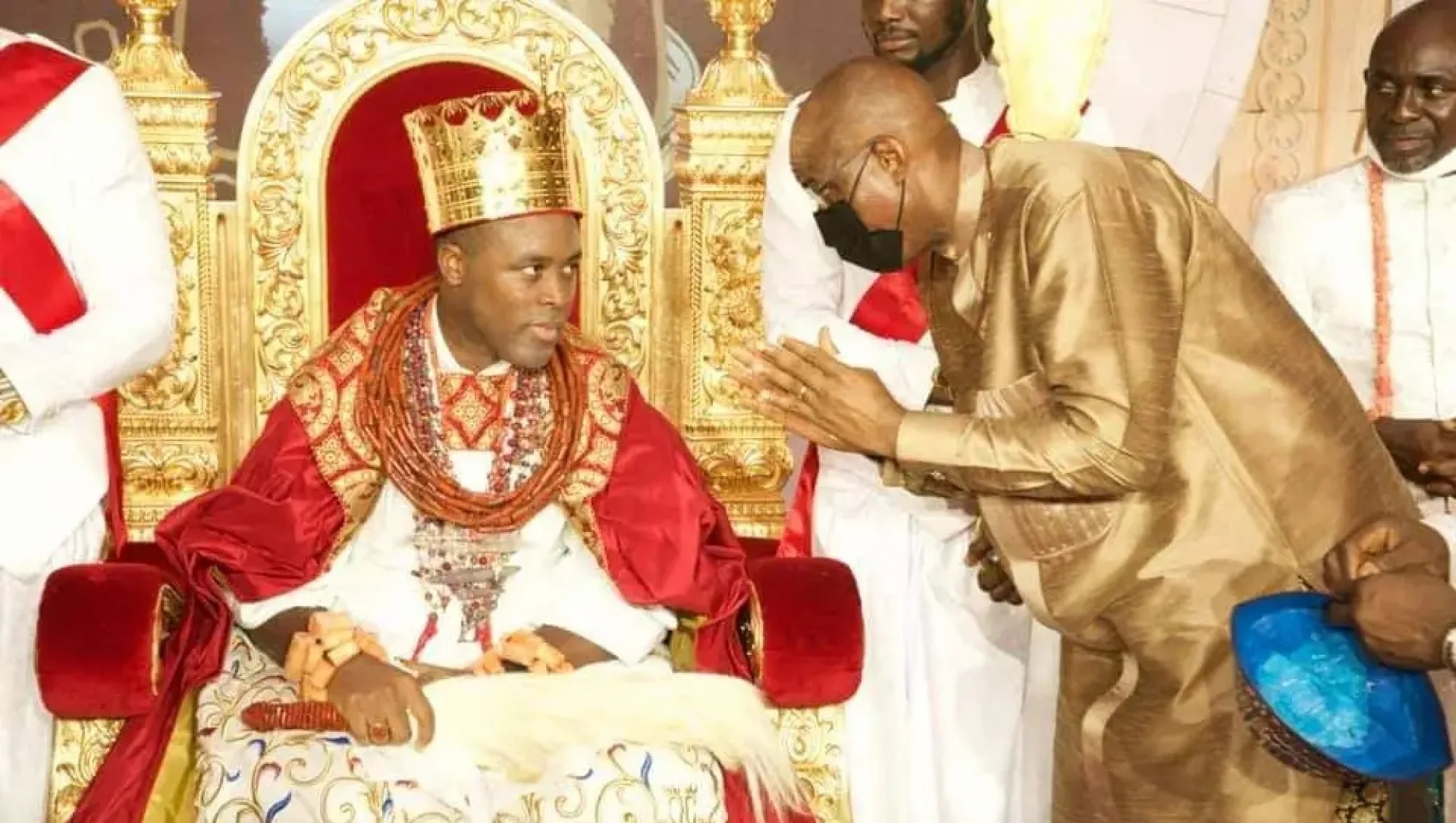
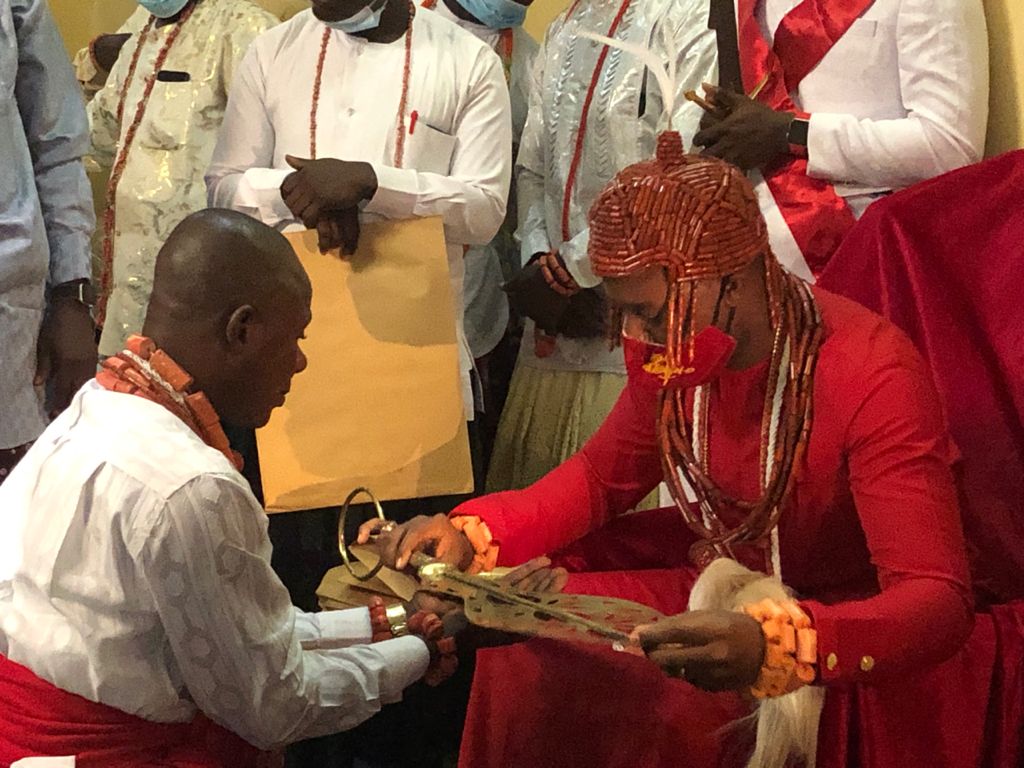
With such a profile, it is no wonder then that the Akpos of this world are today in the dilemma of a crisis of identity. Their Warri garb has been ruthlessly torn off their backs with one sweep of a righteous hand in the aftermath of the momentous occasion of the coronation of the new King of the land, the Olu of Warri, His Royal Majesty, Ogiame Atuwatse III. The global acclaim and recognition, the surrealism of the events, the array of dignitaries drawn by uncanny forces to pay obeisance to the new king, the radiations of his imperial person, and the mystic of genuine kingship so uncommon in this realm yet so gracelessly counterfeited, leave them mesmerized and embarrassed in their nakedness. The reality dawns on them at last that Warri has never been theirs. Worse still, they realize also that they have been making fools of themselves laying claim to the ancestral home of their benefactors.
With vestiges of the usurped Warri cloak still clinging to them, reality forces them to reach for something, anything but Warri, to cover their nakedness. And like shameless thieves that have been caught and surrounded by a mob, their protestations are defiant and desperate as they seek to push the vestiges aside, “I did not touch your Warri o. Okay, take your Warri nah. Me, I am from Wado. I am not from Warri. You can keep your Warri…”
They have even gone as far as tampering with Google Maps and Waze applications on the internet to show certain locations in Warri as Wado. They forget, or refuse to come to terms with the fact that all the lands they inhabit in Warri are at the instance of the Itsekiri. Okere land belongs to Okere people, not to Idimi Sobo or Okere-Urhobo people, as some of them like to call themselves. The radical title to all of 281.1 acres that is Idimi Sobo, alias Okere-Urhobo, belongs to Okere people. Their Supreme Court victory of the seventies only granted them a possessory title. Likewise, all lands inhabited by the Agbassa Urhobo in Warri, including Agbassa itself, Igbudu, Edjeba, Ukpokiti, Ogunu, and Ekurede-Urhobo, are at the instance of the Olu of Warri. These are long settled legal matters. No sophism or political histrionics can change the facts.
Apart from the radical titles to the Agbassa and Idimi-Sobo, alias Okere-Urhobo, lands, the Itsekiri have the following full-fledged Itsekiri-speaking communities within Warri Metropolis – Odekporo, Ode Ile, Idimi Jakpa, Ogunobite, Ajamimogha (all in Okere), the entire GRA and Nigerian Ports Authority lands, Alders’ Town, Pessu Town, Odion, Merogun, Ugbori, Ekurede, Ugbuwangwe, Ubeji, Egbokodo, and Ifiekporo. Thus it is that the Itsekiri own the entirety of Warri metropolis. Itsekiri will not give up an inch of their ancestral lands no matter the amount of intimidation. The rascality of recent governments exhibited in unilaterally creating kingdoms out of family compounds and gazetting kings for them, cannot stand the test of time and natural justice.
At no time were the Urhobo of Idimi Sobo and Agbassa ever asked to leave Warri. The Itsekiri have always been hospitable to them despite failed attempts by the Urhobo to wrest the lands from the Itsekiri by brute force or force of litigation. They, the Urhobo in Warri, always had, and still have, the choice to live harmoniously with their Itsekiri benefactors but have instead chosen to be prodigal in their conduct over the years. Hence their crisis of identity today, being neither here nor there. Many of them bear Itsekiri names even as they chant their “wadoness”. They would have an Okumagba Layout in their Wado City. Ask them what the meaning of Okumagba is in Wado or Urhobo, they would not know because Okumagba is an Itsekiri word. None of this shenanigan makes any sense. Things like this only happen when people are blind. Blind with envy and driven in their blindness by greed and covetousness. Check out the family tree of the principal actors and you will find that they mostly have Itsekiri mothers, grandmothers, or grandfathers, and at worst Itsekiri in-laws.
Perhaps the one thing that could curb the bloated ego and restore some sense of self-respect to the Akpos of this world is to look them straight in the eyes and ask them to take the counsel of one Billy Oghenebrume in a post titled “LET PEACE REIGN IN RESPECT TO THE TITLE OLU OF WARRI” which trended on social media in the last month –
“The Itsekiri people do not have problem with Urhobo-speaking people. Having issues of title to lands with Okumagba family and Agbassa people who are Urhobos does not amount to Itsekiri people having ethnic war with Urhobo-speaking people. Itsekiris are peace-loving people and will continue to be peace loving.
I particularly don’t see any of my friends in Warri along ethnic lines because we share almost everything in common but Warri as a city and as a name has its own history from pre-colonial, to inter-colonial, and post-colonial eras, and by virtue of Supreme Court judgements to lands which ethnic sentiments can no longer change.
In post- and inter-colonial times, Warri served as the base for Portuguese, Dutch and British slave traders hence the early western education enjoyed by Itsekiri people. Warri was ruled by Itsekiri elites and the last GOVERNOR OF WARRI was the person of Chief Dore Numa. Warri was made PROVINCIAL headquarters (WARRI PROVINCE) by the British in the early 20th century.
Because WARRI PROVINCE then covered the whole of present-day Delta State (excluding Anioma areas), the OLU OF WARRI TITLE gave rise to protests from various ethnic groups within the province in 1950 through 1951 that the Olu of Warri title should be changed to Olu of Itsekiri and this was temporarily granted by the government for peace to reign.
But Warri is a name of a place to a people, aside being the capital of the then Warri province. There is nowhere like no man’s land, everywhere is attached to a people. The Itsekiri people responded by virtue of history that while they don’t own the entire WARRI PROVINCE (as then defined) they own Warri as a place (kingdom), as a town, and as a people, and as such it should reflect in the title of their King.
After the coronation of Ginuwa II, Itsekiri people petitioned Lagos and London, making a case for their Olu’s title. This matter became an issue of topical importance, and no less a person than Dr. Nnamdi Azikwe contributed to the debate then in the West African Pilot of 14 May 1940 as follows:
“His highness Ginuwa II is Olu of the Itsekiri-speaking people who live in Warri Township. If the matter is to be discussed in detail, it will be found that a definite title is necessary, in which case the Olu of Warri seems to be most historical and correct. When we speak of the Oba of Lagos, we refer to the paramount Native Ruler of Lagos Township, although Lagos is populated mainly by Yoruba-speaking peoples and Lagos is part of Yoruba land. So too in the case of his Highness Ginuwa II, the Olu of Warri, the paramount Native Ruler of Itsekiri-speaking people and Warri town is Itsekiri Land”.
That was vintage Dr. Azikiwe, a patriot and nationalist who also joined the debate on the OLU OF WARRI TITLE in those days. Then, when independence drew near, Awolowo, the government leader in the Western Region, well known for never toeing Dr. Azikiwe’s political lines, had to take the matter of the Olu of Warri title to Parliament in 1952. After a healthy debate there, the Delta parliamentarians accepted that WARRI PROVINCE be changed to DELTA PROVINCE so that Warri, as a name, and a place should revert to those who own it.
On the prompting by London, the Governor General in Lagos, following the parliamentary approval of the title “THE OLU OF WARRI” In Ibadan in May 1952, wrote a report to London dated 14 Oct 1952 justifying the change, saying it was based on “sound historical grounds especially as Warri Division (sic. Jekri-sobo Division) which consisted of two areas, the Itsekiri and the Sobo area” had been separated” (C544/708/of Colonial records).
This change, acclaimed as a victory by all parties (including Urhobos) involved, removed the universal impression that all ethnic groups in the province would be regarded as subjects of the Olu of Warri because of the former name ” WARRI PROVINCE”. The non-Itsekiri Parliamentarians were all satisfied with the change, Hon… Otutu, a Kwale parliamentarian on their behalf, proclaimed in the Daily Times of 31 January 1953: “we accept the change.” On the Itsekiri side, rightful title of their Olu had reverted to the ancient throne.
“In recent times, those protesting against the title of the Olu of Warri are ignorant of what their forebears had accepted and adopted approximately 60 years ago in good faith.
I repeat, the Olu of Warri title has grown in history and legacy above ethnic lines. Warri is for everyone to stay but the title, the Olu of Warri, cannot be changed in history.
THE CREATION OF NEW AND RIVAL KINGDOMS IN NIGERIA IS NOT PART OF THE CHARACTER OF ITSEKIRI PEOPLE.
Now, the reading public may be able to assess from the following verifiable facts the reasonableness and peace-loving nature of the Itsekiri in Delta State: –
The “Okumagba family” merely won a possessory title (see radical title) to a 281.1-acre farmland near Okere part of Warri by a court judgment and has sought to have a rival kingdom in Warri called “Okere Urhobo kingdom”.
Now look, “the Mene-Okotie family” of “Itsekiri extraction” has by a judgment in suit no. S/66/69 of the same Supreme Court won a 775.10-acre family land within the Urhobo kingdom of Mosagar. To the relief and joy of the entire Mosagar Community, the Mene-Okotie family has shunned setting up a kingdom there.
Also Gbolokposo, another Itsekiri Community, by another Supreme Court judgment, No. Sc/98/1993, has won and radically owns 1993.77 acres of their land under the overlordship of the Olu of Warri within the Uvwie kingdom in Urhobo land. Today they are living happily together and the Gbolokposo Itsekiri are not thinking of setting up any kingdom in Uvwie land.
If we go by ownership of land, whether possessory (given to settlers and customary tenants who have settled for a long time) or radical title given to Aboriginals, by the equation, 1993.77 ÷ 281, 775.10 ÷ 281.1, this will give the Itsekiri people 7 kingdoms in Uvwie (URHOBO LGA) and approximately 3 Itsekiri kingdoms in Mosagar (IN URHOBO LGA). Should Itsekiri therefore start saying that there should not be an Ovie of Uvwie or there should not be Ovie of Mosagar? Should Itsekiri people start proliferating kingdoms in those places where they have radical titles to land? I guess many Urhobos will frown. As much as people can choose to do what they like, we cannot afford to be having kingdoms on every piece of land.“
You can read the Supreme Court Judgement on Igbudu (Agbassa) lands here: https://lawcarenigeria.com/chief-sam-warri-esi-vs-the-chief-secretary-to-the-federation-of-nigeria-ors/”
Bless you, Oghenebrume! With the likes of you, peace and harmony shall certainly reign in these lands of our forefathers and those who for selfish reasons do not want peace shall be rolled over in the inevitable change! But lastly, a word for our comedians. Stop playing football with our mother’s pot. Akpos is not a “Warri boy”; at best he is an Agbassa or Idimi Sobo alias Okere-Urhobo boy. Address your Akpos as such in your shows and please spare our town and kingdom the ignominy of representation in that character. And, by the way, Warri is not “area!”. We are people of a noble deportment.
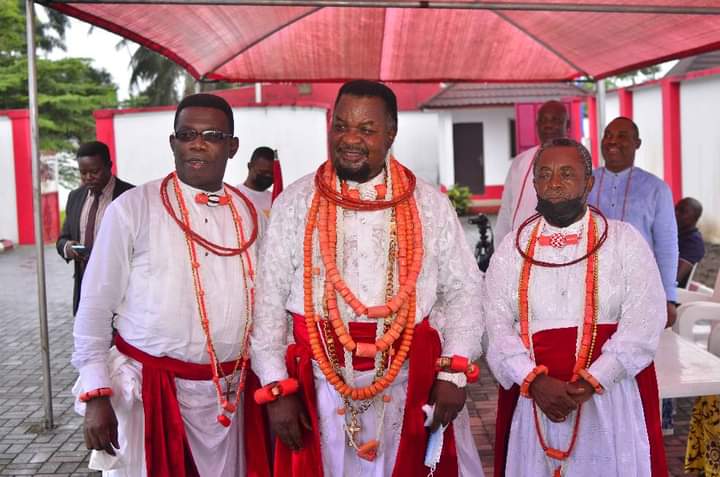
 WARRI PEOPLE